3D Boxer Moving According to Scores
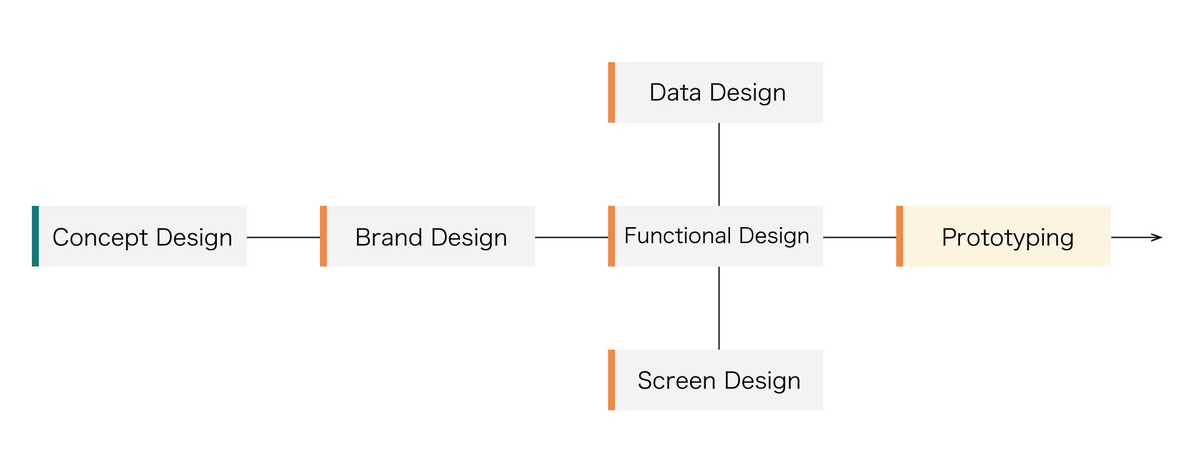
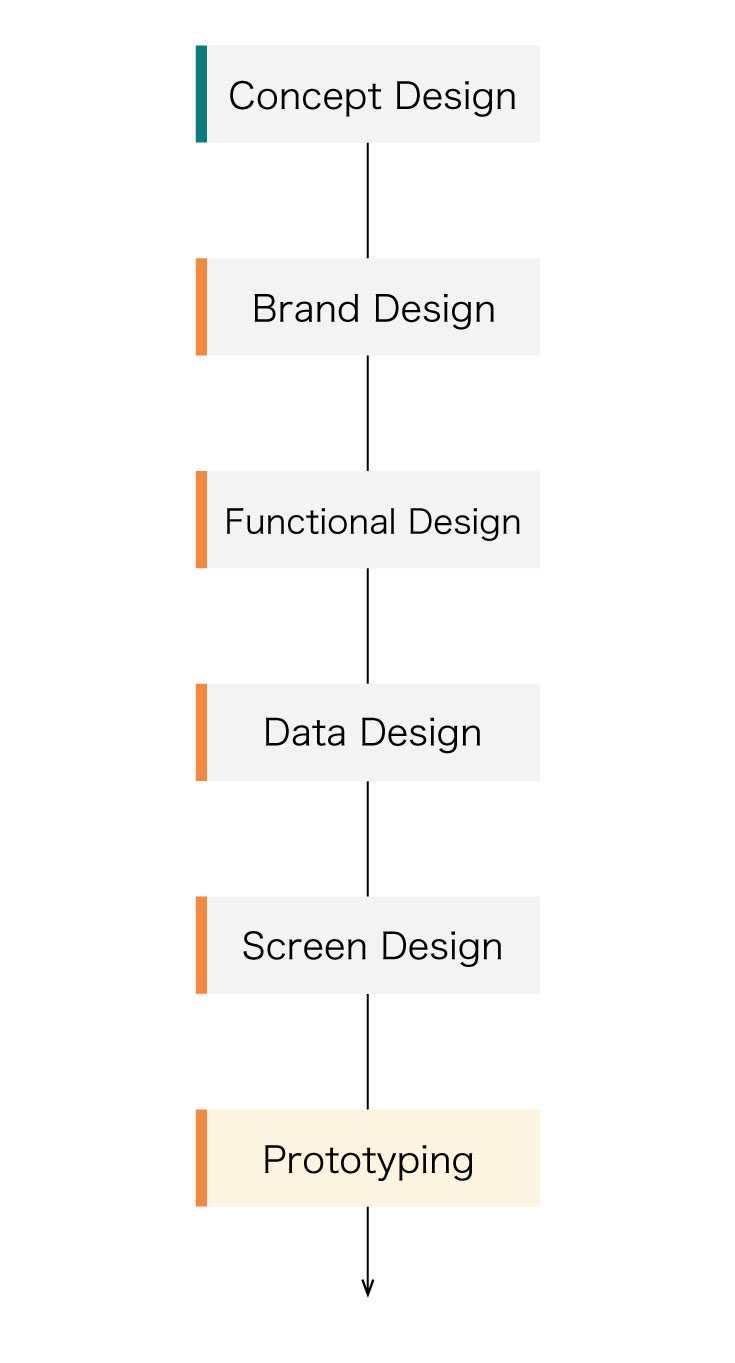
In developing the prototype, I start with the most technically uncertain component. For SheetBoxing, the area lacking a clear implementation approach for me was how to dynamically animate a 3D CG boxer to perform boxing movements based on the score data. Thus, development will begin with this component.
Here, we'll refer to this boxer, which moves in response to program commands, as "Autoboxer."
Defining Technical Challenges
The reason the implementation approach was unclear is that I’ve never worked with 3D CG in a web browser before. When the implementation strategy is uncertain, it’s necessary to test each technical component required to construct Autoboxer, one by one.
As we discussed in representing boxing actions in text, the combinations for boxing movements expand exponentially. A single movement yields 864 variations, while a three-move combination, like jab-jab-straight, results in 650 million combinations. Preparing data for all these combinations is infeasible, so the goal is to break down complex boxing actions into basic elements and combine only these elements to represent complex actions.
The foundational theory here is the design philosophy that “a boxing action consists of three independent elements: offense, defense, and step.” Adopting this principle for Autoboxer, the design requires an implementation for combining animation elements. For instance, a jab combined with a front step should yield a jab with forward movement. We’ll call this animation composition. Next, since boxing actions rarely end with a single movement (as evident in combinations), Autoboxer should smoothly transition between actions. This will be called animation transition. Thus, the primary technical challenges are as follows:
Technical Challenges to Test
- Animation composition
- Animation transition
Establishing a Debugging Cycle
Programming involves a cycle of (1) implementing, (2) running, and (3) checking for errors, then repeating from (1). This repetition, or debugging cycle, is essential for development. In web development, the typical cycle is to (1) edit code in an editor, (2) reload the browser, and (3) check for errors in the browser or console. However, since we’ll be importing 3D CG data not created in the browser, we’ll need to establish a custom debugging cycle.
Playing 3D Data in a Web App
To start, I loaded a commercially usable human model. Using Mixamo, I found data for a human model with boxing movements and confirmed it displays in the web app.
The sample data successfully displays in the web app.
Displaying Blender Animations in a Web App
After installing Blender, the free 3D creation software, I created a simple animation to confirm it could be displayed in the web app. To aid in testing technical challenges, I created animation elements for a jab (100), rear block (030), and front step (001).
Now we have a debugging cycle where I (1) create animations in Blender, (2) load them into the web app for playback, and (3) check the display in the app. With this cycle, it’s now a matter of trial and error until completion, which brings peace of mind to any developer.
I then modified sample code to play the three created animation elements sequentially: front step (001), jab (100), and rear block (030). This moves us forward toward implementing animation transitions.
Additionally, I combined the jab (100) with the front step (001) to execute both actions simultaneously. While the two animation elements slightly interfere with each other, improvements should enable successful animation composition.
Preparing the Debugging Cycle
Preparing Animation Elements
To refine testing, I created more accurate animation elements in Blender, including jab (100), straight (200), hook (300), both-hands block (010), right-hand block (020), left-hand block (030), right-hand parry (040), left-hand parry (050), left head slip (060), front step (001), back step (002), left side step (003), and right side step (004). Based on representing boxing actions in text, the prototype will require twelve offense, twelve defense, and six step motions.
Preparing Test Data
The goal is for Autoboxer to perform specified actions by combining these animation elements according to the score data. To achieve this, I prepared sample score data.
Following the structure in Digital Representation of Scores, I adapted it for use directly in the web app.
Since the structure’s labels (names) must be expressed in text, I’ll use the literal notation from representing boxing actions in text. For example, what would typically be called "lead-straight-head-with-front-step_rear-straight-head_both-block" can simply be labeled as "101-200-010."
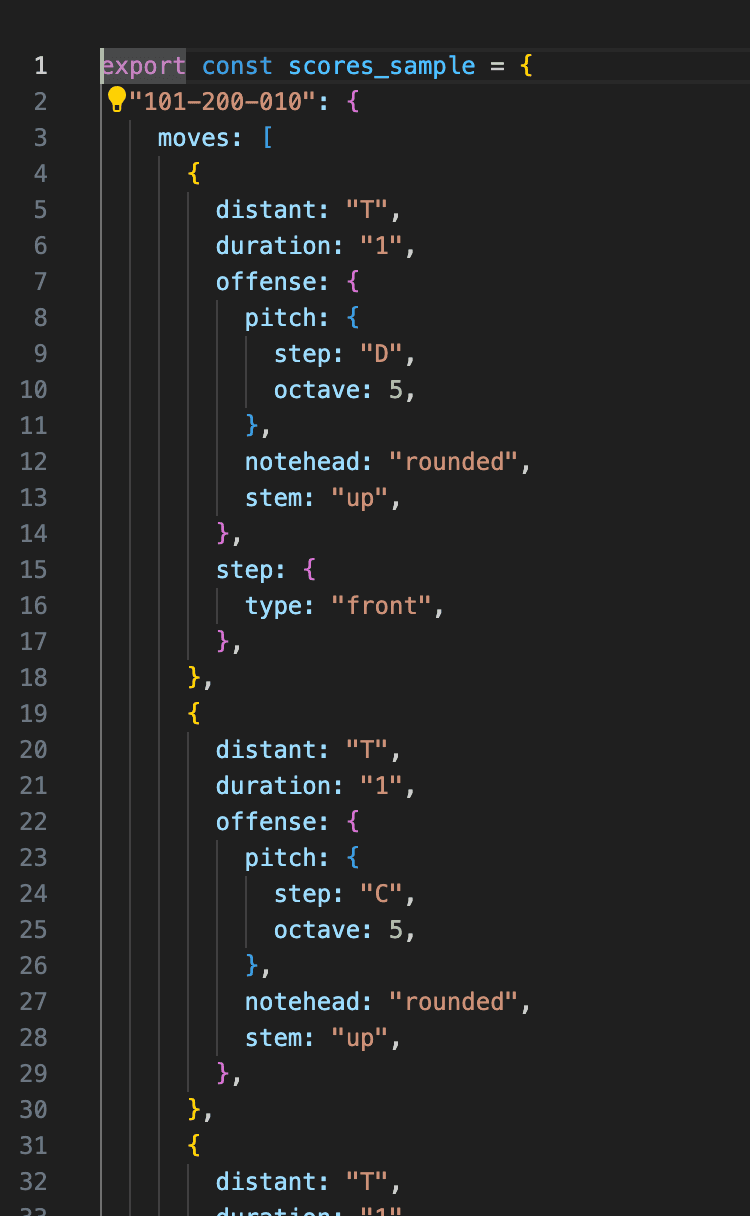
With the animation elements and score test data ready, we are prepared to develop Autoboxer.
Technical Investigations
Animation Composition
The initial investigation showed that, when playing multiple animation elements simultaneously, the movements averaged and failed to perform as expected. I adjusted the elements to avoid interference, enabling animation composition. Below, I combined a jab (100), jab with right-hand block (130), and jab with right-hand block plus front step (131).
Animation Transitions
The initial test allowed playing animation elements in sequence, but transitions between them were rough, resulting in abrupt movements. I’ve improved this so Autoboxer can perform continuous movements smoothly.
Representing Steps
Stepping involves forward, backward, and lateral movement. If Autoboxer were to actually move, it would require adjusting the camera’s position in 3D CG space, complicating continuous forward motion. Therefore, to represent stepping, Autoboxer remains in place while shifting the ground underneath to simulate movement.
With this, we’ve addressed the primary technical challenges needed to implement Autoboxer.
Autoboxer Prototype
After refining each animation for visual appeal, the final result looks like this. Now we have a clear path forward for a dynamically moving Autoboxer based on score data.