Shadowboxing as Kadenz
A boxing offense typically transitions from the secure tonic distance, progresses to the riskier subdominant or dominant distances for executing combinations, and then retreats back to the safety of tonic distance. This sequence of movements will be referred to as 'tactics'.
Analogy from musical cadence
In music theory, a cadence is a customary chord progression that concludes or pauses a piece of music. Utilizing cadences imparts a sense of completion or intermission in the music. As the smallest unit of functional chord progression, a cadence can be viewed as a form of musical grammar. There are three widely recognized types of this musical grammar.
Kadenz in music theory
T-D-T
T-S-D-T
T-S-T
Utilizing this kadenz classification within boxing tactics simplifies the comprehension of extended sequences of movements.
In boxing theory, two distinct concepts emerge from the term 'cadence.' One pertains to the grammar of boxing, while the other describes a combination executed at the end of a tactical maneuver to evade an opponent's counterattack. To clearly differentiate between these two, the German spelling 'Kadenz' will be used to denote the cadence that refers to boxing grammar.
Modification of kadenz considering avoidance movement
Before integrating kadenz into boxing, let's consider evasive actions. My trainer often emphasizes the need to 'throw a punch and quickly move.' Indeed, after delivering a punch, you become vulnerable to a counterattack if you remain stationary. Hence, it's crucial to 'move' post-attack. This 'move' is aimed at dodging the opponent's counterattack or repositioning to a spot where their strikes can't reach you. Since this avoidance maneuver invariably concludes the kadenz and effectively ends the 'boxing sentence,' we've termed this action 'cadence' or 'cadential combination,' drawing from the English pronunciation of 'cadence.' We denote this using the symbol C.
Cadence essentially blends offensive and defensive maneuvers, varying according to the distance involved. A prime example is the cadence at tonic distance, denoted as Ct.

This example illustrates a movement where, following a punch, the boxer immediately steps back and then sidesteps to evade the opponent's follow-up attack.
Next, we'll explore an example of cadence at subdominant distance, denoted as Cs

Following a combination at subdominant distance, there's usually insufficient time for a backstep, as the opponent's straight punch is likely to be fast approaching. Thus, the need arises to either move sideways or duck to elude the opponent’s retaliatory strike. In this scenario, the boxer ducks to the left, anticipating a straight counter, and then executes a sidestep combined with a weave to avert a subsequent hook.
Up next, an illustration of cadence at dominant distance will be provided.
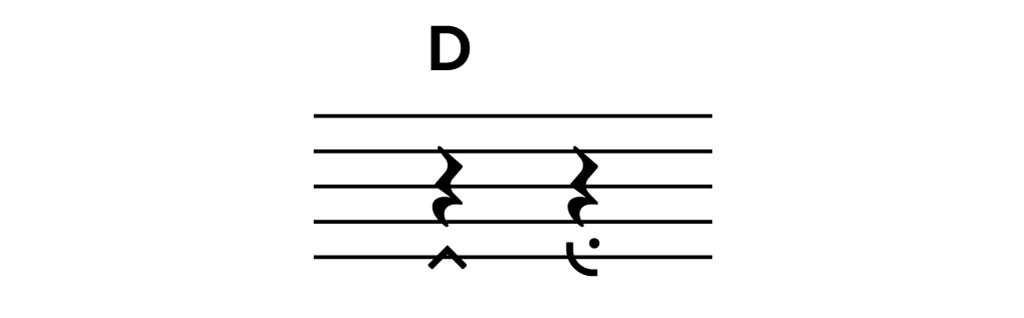
When you're extremely close to your opponent, retreating makes you more susceptible to their counterattacks. Instead, advancing further and then executing a pivot to move to the opponent's side, thus stepping out of their range, is a more effective tactic. The details of the pivot maneuver are elaborated in the section Notations for Other Moves.
As discussed, we've established that in boxing tactics, there's invariably a cadence, an evasive maneuver, concluding each tactical sequence. Furthermore, this avoidance movement varies based on the distance involved.
Kadenz in boxing theory
Recognizing the consistent presence of a cadence at the conclusion of a tactical movement, a defining characteristic of boxing, we will adapt the concept of cadence from music theory accordingly.
T-D-T → T-D-C
T-S-D-T → T-S-D-C
T-S-T → T-S-C
Moreover, in a real bout, early stages often involve attacks and defenses maintained at tonic distance, making it more practical to contemplate kadenz achievable solely through combinations at tonic distance. Therefore, we will introduce an additional kadenz. After arranging these in order of their respective distances, we can summarize the kadenz in boxing as follows.
Kadenz type 1(K1): T-C
Kadenz type 2(K2): T-S-C
Kadenz type 3(K3): T-D-C
Kadenz type 4(K4): T-S-D-C
Below are detailed examples of each type of kadenz.
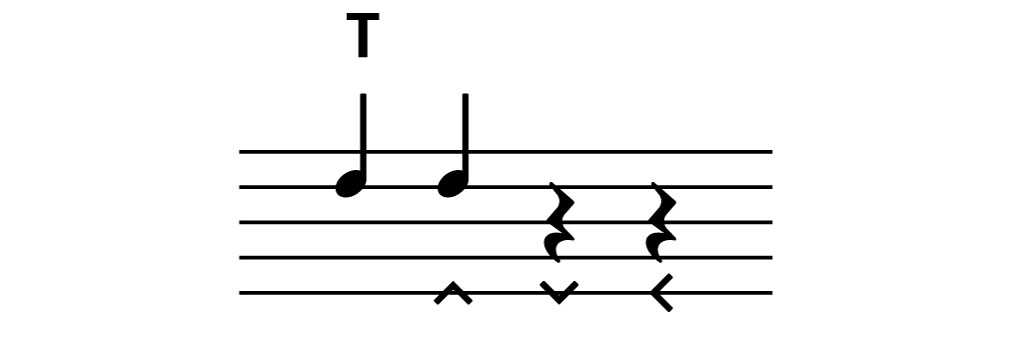 K1 tactic example
The aforementioned k1 kadenz, commonly observed in the early stages of a match, involves the opponent executing a jab-based combination at tonic distance, followed promptly by re-establishing the distance.
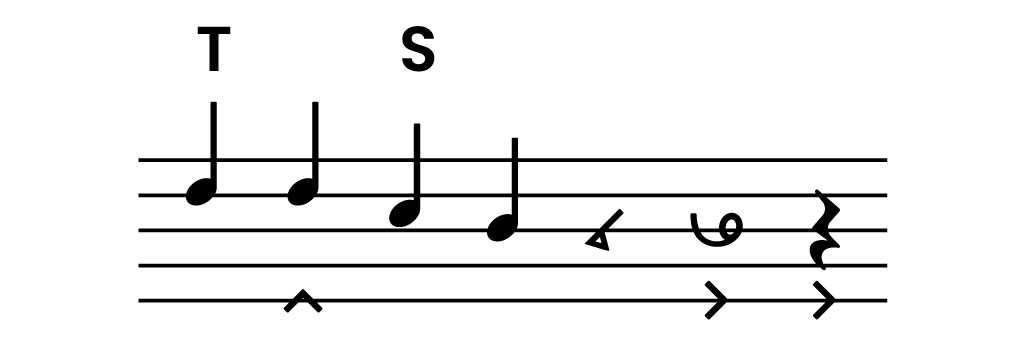 K2 tactic example
The above is a k2 kadenz that moves from tonic distance to subdominant distance and escapes out of the opponent's range. This approach is effective when there is some predictability in the opponent's movements.
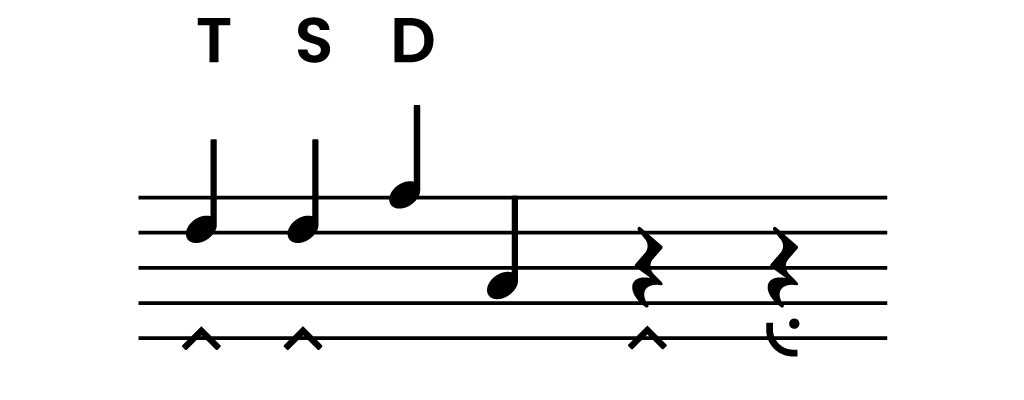 K3 tactic example
The above is a series of moves in which you quickly move from tonic distance to dominant distance and escape out of your opponent's range. This is a kadenz that occurs as a result of both players moving forward when attacking an opponent who is moving forward or aiming for a counter.
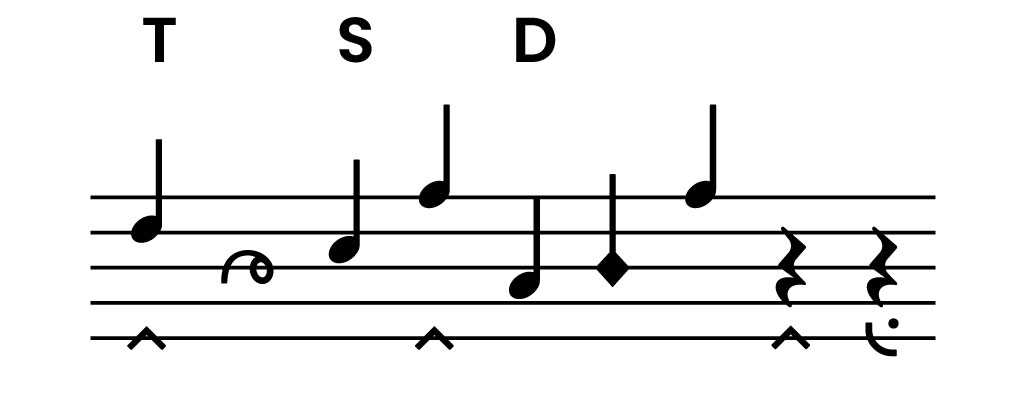 K4 tactic example
In this scenario, a combination is executed starting from tonic distance, advancing to subdominant distance, and then proceeding to dominant distance for a further attack. This often occurs when the opponent is thrown off balance by a combination executed at subdominant distance.
Viewing the sequences outlined here merely as combinations makes them impractically lengthy for memorization and application. Forcing oneself to remember such complex patterns is often futile, as real combat seldom presents opportunities for their exact execution. In reality, the distance is a dynamic factor, constantly altered by the conflicting intents of both fighters. Opponents react to our attacks with evasive maneuvers or advance with counterattacking intentions, making complete control of the distance an impossibility.
In the realm of music, kadenzes consist of chord sequences. Similarly, in boxing, a kadenz is a compilation of various combinations. By interpreting these extensive movements as kadenzes rather than fixed combinations, it becomes more feasible to analyze them as an assortment of combinations tailored to each specific distance.
Using K4 from the above examples as a reference, we can proceed with the following analysis.
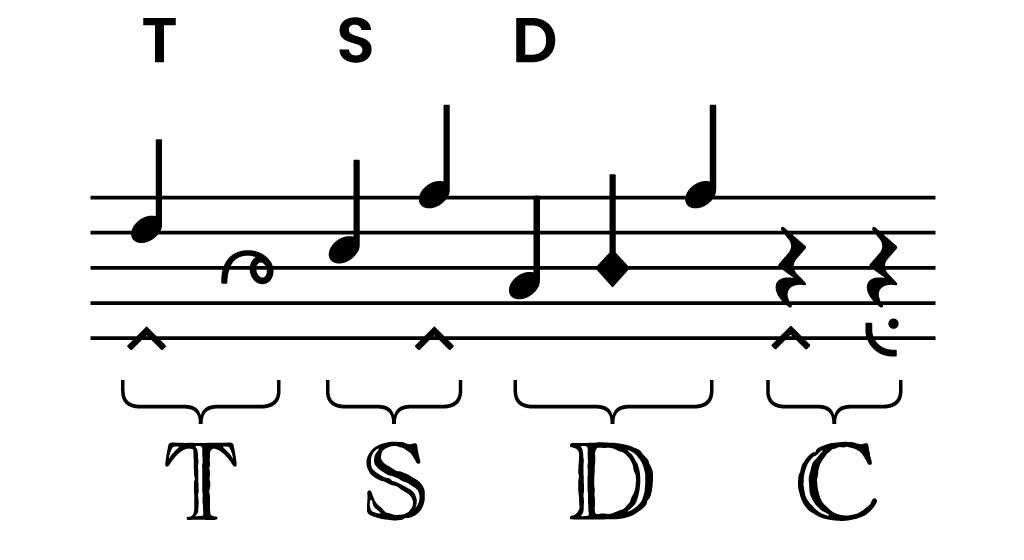
In this context, we will refer to a series of movements at tonic distance as a 'tonic combination,' at subdominant distance as a 'subdominant combination,' and at dominant distance as a 'dominant combination'.
Why combination symbols?
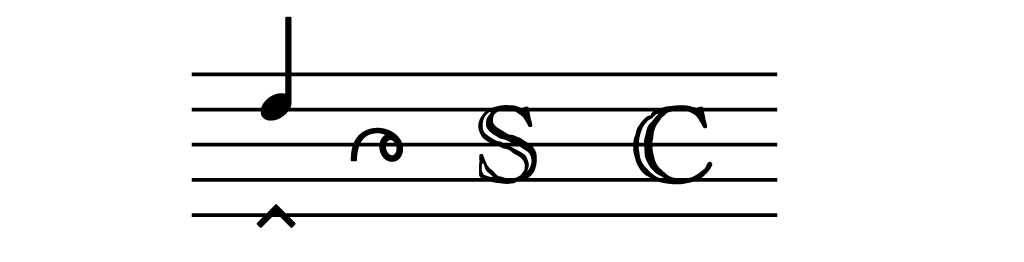
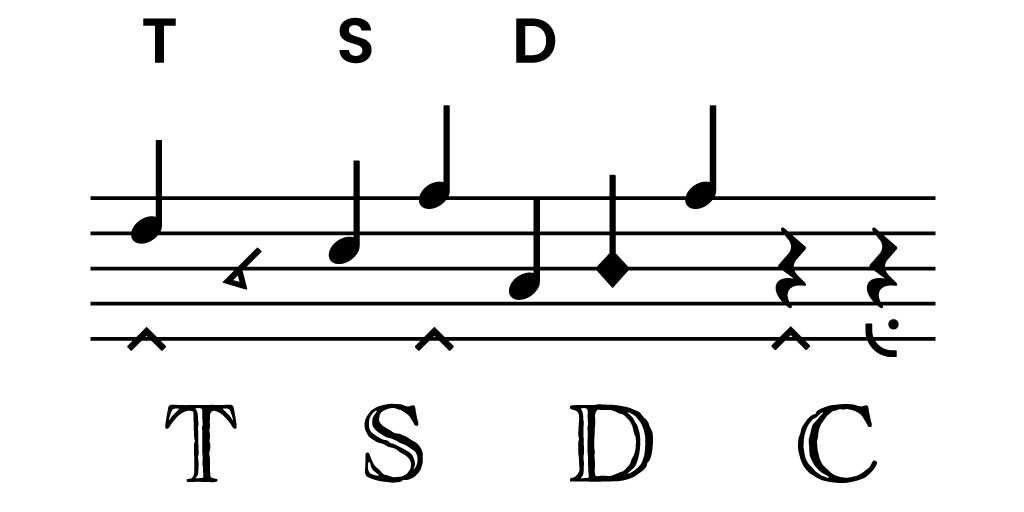
By using distinct symbols to represent combinations at particular distances, it's possible to concentrate the discussion on specific aspects of the kadenz. For instance, in analyzing the kadenz sequence T→S→C, if the focus is solely on the initial tonic combination, it can be distinctly expressed as follows:
By substituting different combinations, we can investigate the potential variations arising from a single kadenz. For instance, in the K4 tactic mentioned earlier, we can experiment by replacing the initial tonic combination with an alternative tonic combination.
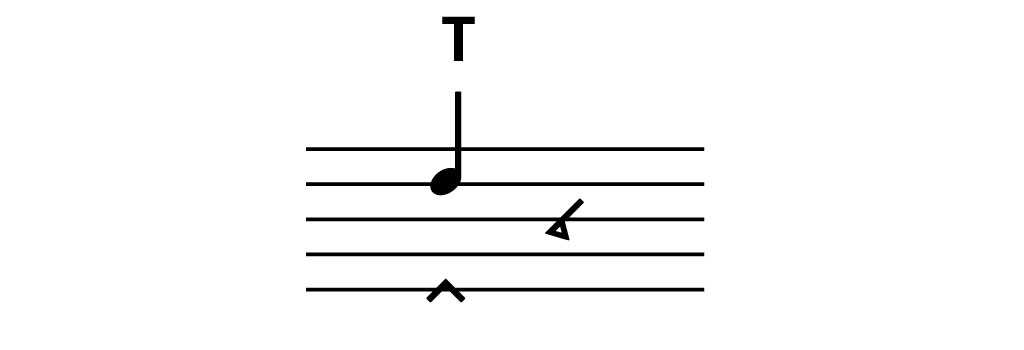
The resulting tactical kadenz would then be structured as follows:
Practice as shadowboxing
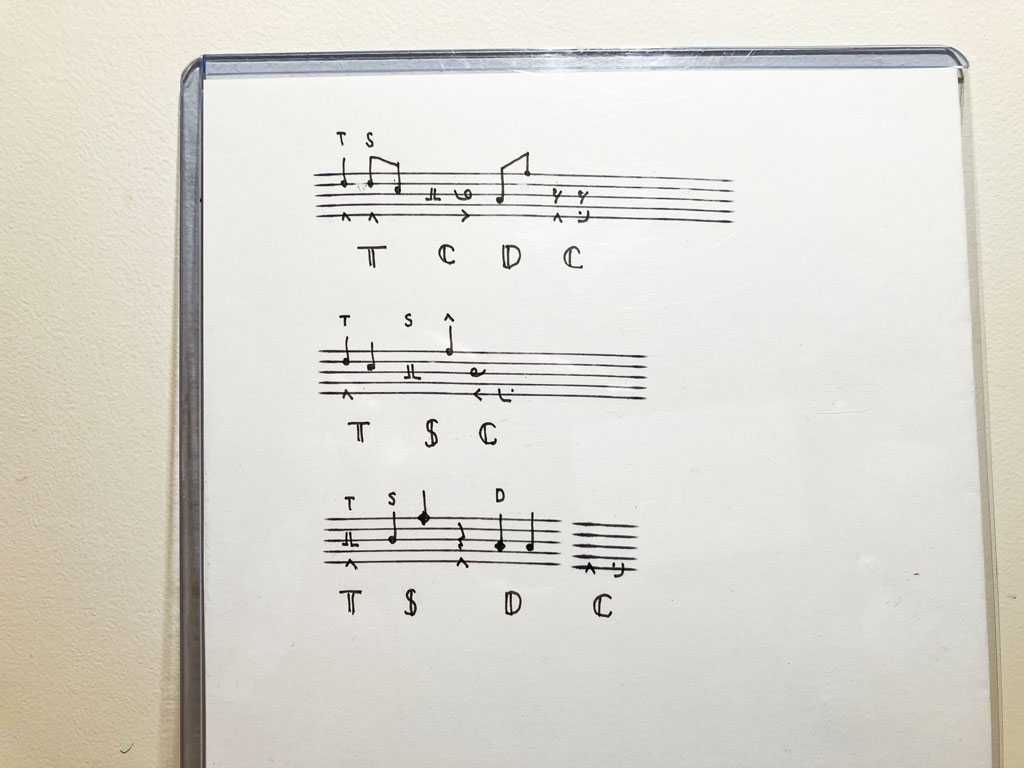
The kadenzes we've discussed can be employed as training patterns in shadowboxing. While shadowboxing serves various purposes, from warming up to form checking and simulating actual combat, in this context, we'll focus on using it as a means to enhance tactical movement skills.
For instance, if your strategy involves maintaining distance from your opponent, you could memorize several Type 1 kadenzes (K1) that transition from T to C. Alternatively, if an opportunity arises, you might employ a Type 2 kadenz (K2), which advances to subdominant distance for a powerful attack. In your training regimen, you might practice one kadenz per round at the gym.
As mentioned in Separate Moves and Tactics, to ensure you remember the specific kadenzes you intend to practice, consider writing them down in a memo before heading to the gym for your training session.
What are tactics in boxing?
The process of devising a boxing tactic primarily involves considering 1) the selection of an appropriate kadenz, and 2) the specific combinations that constitute the chosen kadenz. In context, if your strategy is to fight from a distance, predominantly employing K1 would be ideal, while close combat would necessitate the use of K3. Occasionally, you might also contemplate unique kadenz progressions that deviate from the basic patterns previously outlined. For example,
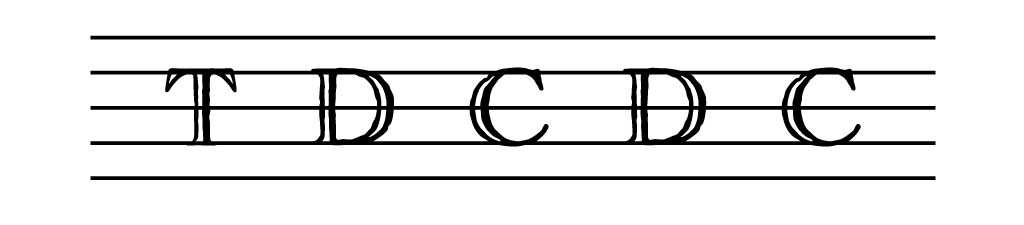
A kadenz mentioned above represents a tactical approach aimed at closing in on your opponent while ensuring you don't miss the chance to engage effectively.