Notation for Defenses and Steps
Defenses
In the realm of boxing, the term "combination" typically brings to mind a sequence of punches. However, it is important to note that during mitt training, you will not only learn punch-based combinations, but also combinations that incorporate defensive maneuvers. Therefore, when we refer to "combinations," we are encompassing both offensive and defensive movements. These combinations may include purely defensive actions or a blend of offensive and defensive maneuvers.
In order to express defensive movements on sheet boxing, we will define symbols corresponding to each defensive movement. For these, there are no rules that can be directly referenced from sheet music or drum scores, so we will have to design our own.
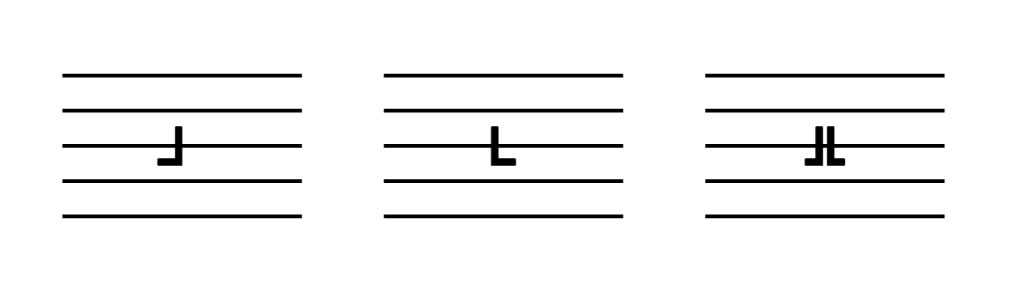
Block
The design was based on the movement of the hand when blocking. Blocks can be done with both hands or with just one hand, so these need to be written down as well. From left to right, blocks with the left hand, blocks with the right hand, and with both hands are shown.
Parry
Since the movement is to deflect the opponent's straight punch, a deflected dot shape is used.

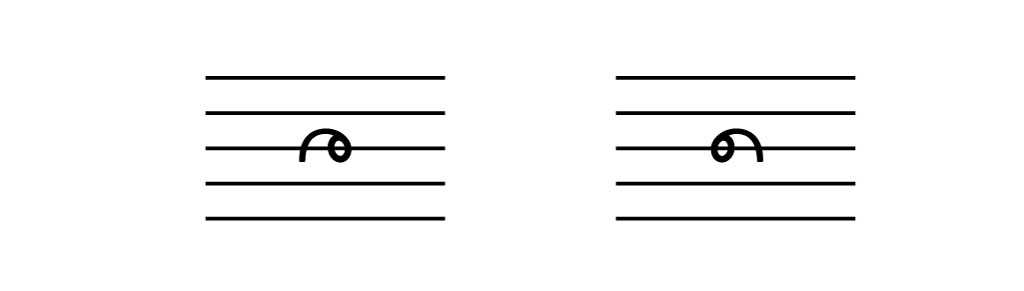
Head slip
This is an image of the trajectory of the head during a head slip motion. The left one represents a head slip that moves the head to the right and the right one represents a head slip that moves the head to the left.
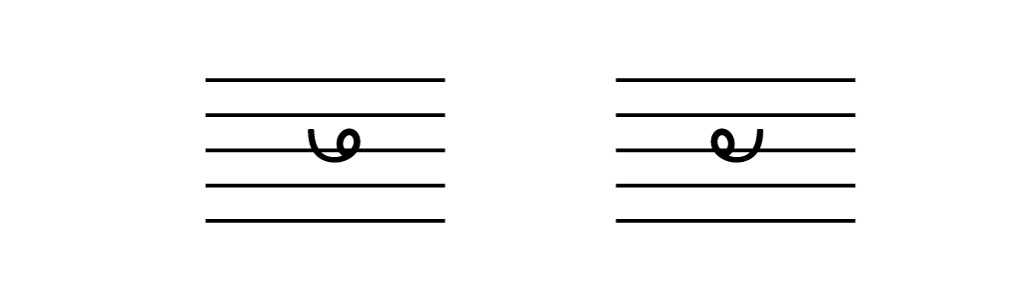
Weave
Weaving is defined based on rules similar to headslips, considering that it is also used in conjunction with headslips. The one on the left is weaving that moves the head to the right, and the one on the right is weaving that moves the head to the left.
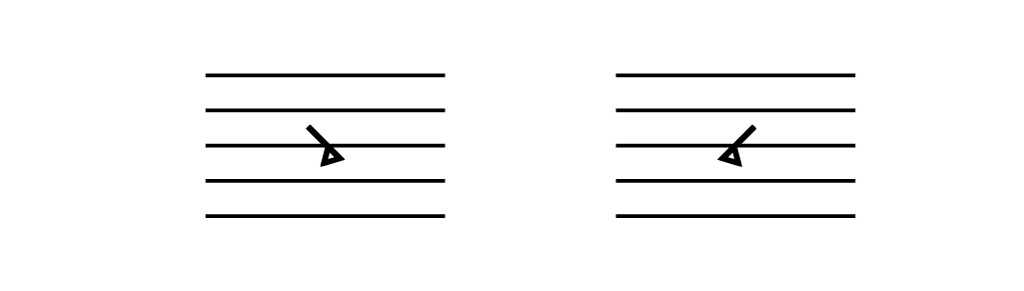
Duck
Ducking is represented by a sharp line because it involves a greater amount of body sinking than a headslip. The one on the left represents a ducking that moves the head to the right, and the one on the right represents a ducking that moves the head to the left.
Problem with defense notations
It is intuitively easy to reflect left and right movements in symbols, but problems arise when you consider the differences between orthodox and southpaw. Regarding the punch expression, even if you are a southpaw, you can read the score written based on orthodox assumptions. On the other hand, the left and right symbols for defense are reversed, so there is no uniformity in the symbols between orthodox and southpaw. Therefore, if boxers with southpaw stance want to read orthodox sheet boxing, it will be necessary to convert it.
Steps
Steps are important in boxing. Even if you hit the same jab, the meaning is different if you hit it in place or while moving forward. Therefore, it is of great significance that these distinctions can be made in sheet boxing as well.
Design the step symbol to match the left-right movement representation of the defense symbol.
Step back

It represents stepping back, where you take a step backwards to gain some distance.
Step left and right
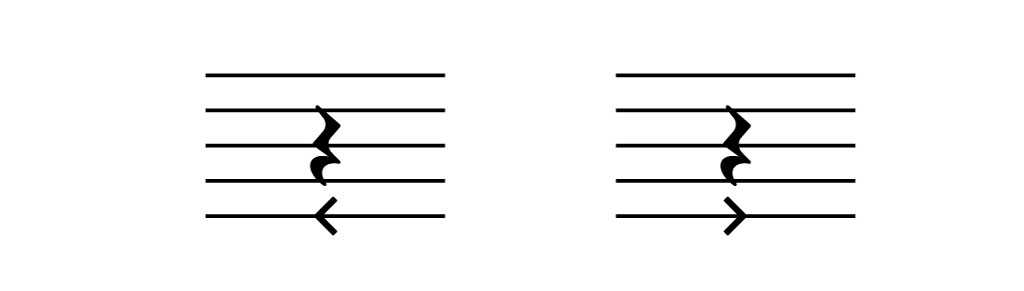
Each represents a step that moves left and right.
Step forward
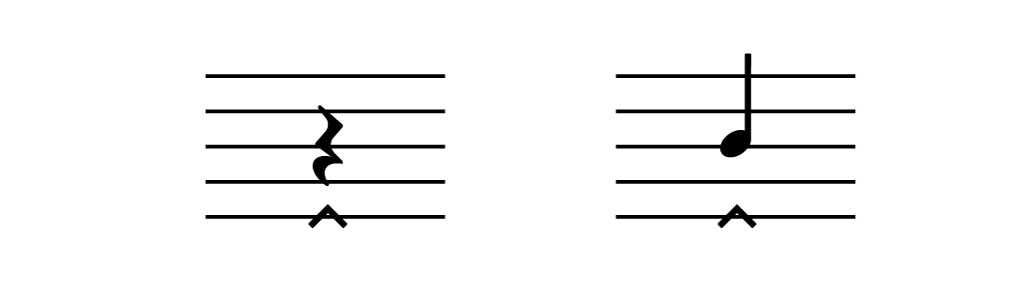
This represents the step to move forward
Sheet boxing including defenses and steps
Boxing movements, including defense and step movements, can now be expressed in sheet boxing as shown below.