Manners to Analyze Boxing
"Song" in Boxing
For boxing matches that attract public attention, a press conference is held before the match. Therefore, the trainer may say something like, "We have done enough research on our opponents". So, what is the specific content of this research? In this article, we will examine how we, beginner boxers, can learn from videos of other people's matches, including professional boxers.
Boxer's movements are not predetermined, but are improvised as the fighters struggle with each other. However, once a match is played, it is already fixed as a record, and this can be written out as a boxing score like a musical score.
A set of boxing notes such as one round or one match can be called "boxing score". Just like a musician analyzes a piece of music, a martial artist should also be able to analyze a boxing score.
As mentioned in Boxing Score Diverted from Music, for purposes such as recording combinations, there is no need for long staves like sheet music. However, when analyzing a boxing match, we will be dealing with information that has a length like a musical song, so musical notes come into play.
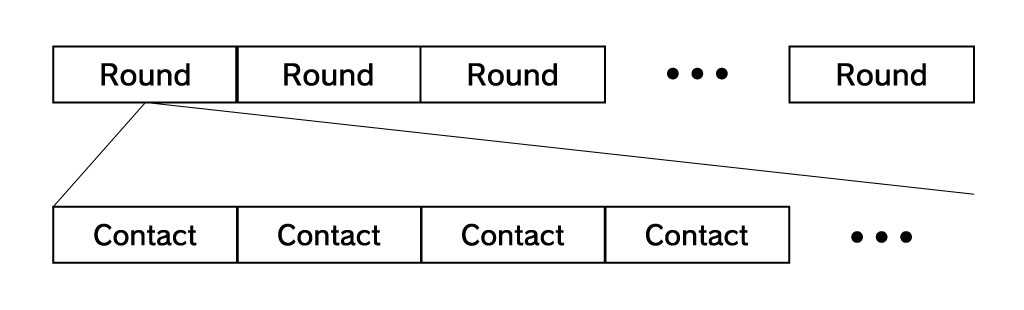
Round is made up of “contacts”
The boxing score, when contrasted with musical notation, has a distinctive feature: in boxing, the two participants are not synchronized to a shared rhythm, eliminating the concept of 'sections' found in music. However, for analytical purposes, it's crucial to dissect the details rather than just view the match in its entirety.
A typical pattern in a boxing match involves a cycle where both fighters engage in attacks, retreat to a safe distance, then reposition before attacking again. This cycle of closing in and then disengaging is what we'll refer to as a 'contact'. For instance, a single round could be broken down into approximately 60 such contacts. By numbering these contacts, they can serve a similar function to musical sections, allowing us to refer to specific parts of the boxing score for in-depth analysis.
Analysis of Boxing score
I will transcribe and analyze the boxing score for the first round of the bout between Ricardo Lopez and Alex Sanchez, which took place in August 1997. The boxing score for such matches is formatted like a duet, allowing the movements of each fighter to be recorded accurately. Each vertical line in the score separates notes corresponding to a 'contact,' with a number written at the start of each line to sequentially number these contacts.
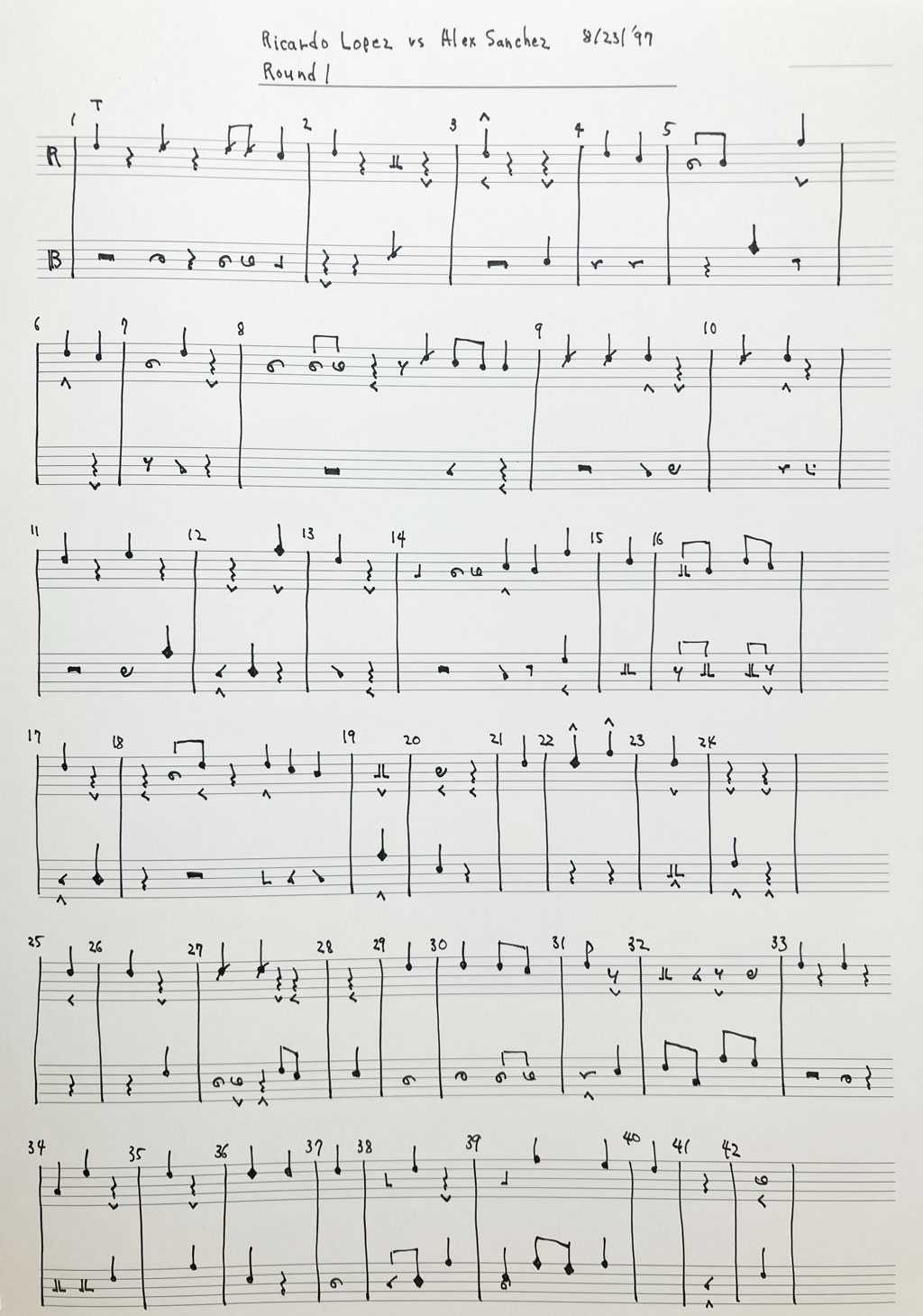 Round1, Ricardo Lopez vs Alex Sanchez (1997/8/23)
The movements of Ricardo Lopez in the red corner exhibit a distinct strategic approach. In the initial contact, Red focuses on jabs with the aim of setting up a straight shot. This straightforward tactic can be effectively represented using a strategy state machine, as illustrated below.
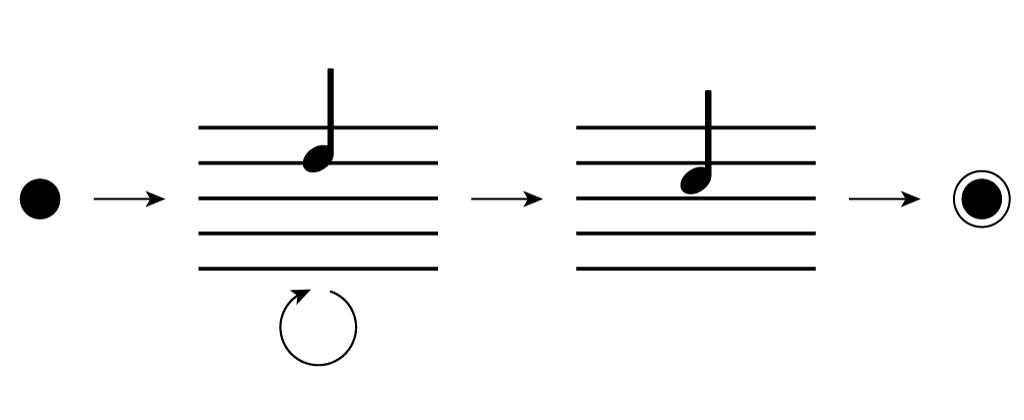 Strategy①
I'd like to turn our attention to the progression from the 4th contact to the 5th contact. After conditioning the opponent to expect a one-two in the fourth contact, it's noticeable that in the fifth contact, instead of delivering a jab, he opts for a left head slip. This move cleverly shifts the timing and sets up for the jab.
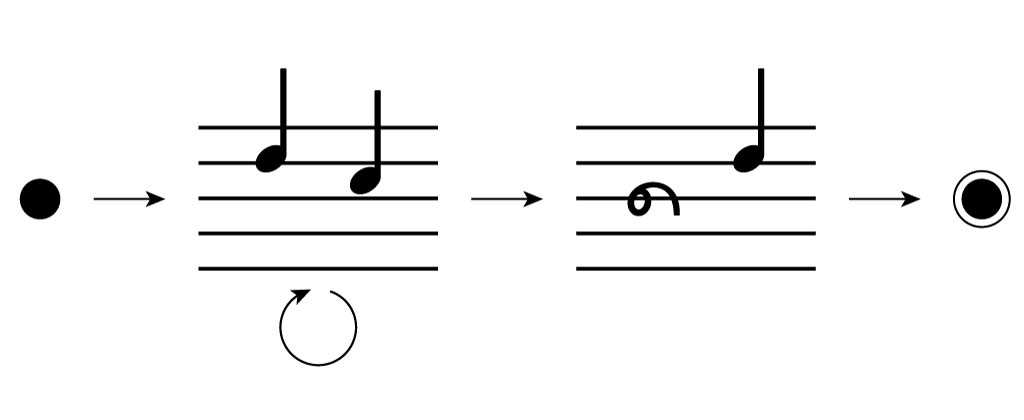 Strategy②
In the 18th contact, the combination utilized in the 5th contact serves as a foundation for subsequent attacks. Notably, from the 4th to 5th and then the 6th to 7th contacts, sequences that align with strategy ② are executed in succession. This pattern likely makes the blue corner wary of two potential actions. In such a scenario, launching a combination that progresses from a one-two to a left uppercut could be interpreted as either a 'third blow' strategy or an 'augmentation' strategy, effectively catching the opponent off guard.
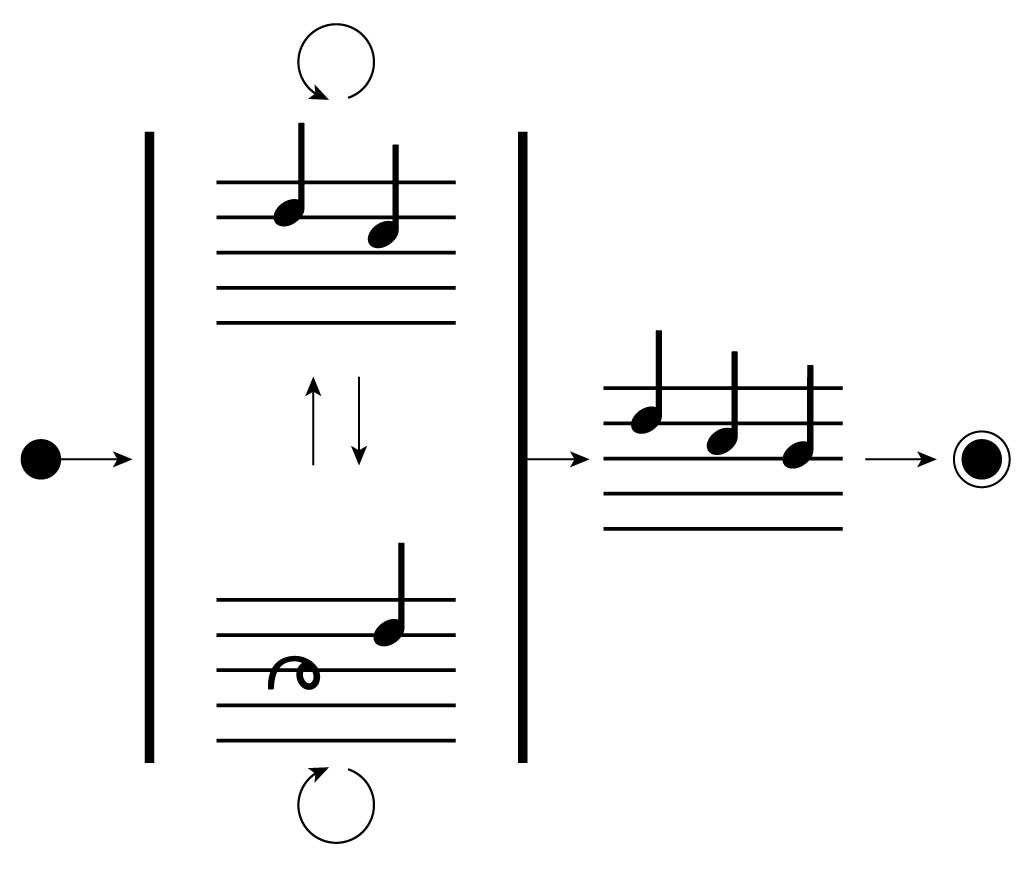
As demonstrated, it's possible to identify strategic elements in the sheet boxing of a technically renowned boxer. Moreover, by analyzing boxing scores, you can identify characteristic combinations to integrate into your own training regimen. Additionally, examining the evolution of movements over several rounds provides insights into how a boxer adapts and shifts strategies throughout the course of a match.